
Case Studies
We invite community discussion about transformational games, educational data mining, learning evaluation, and participatory standards development to understand how people learn with games.
Ways to Join the Conversation
User stories and case studies
Open Game Data social channels
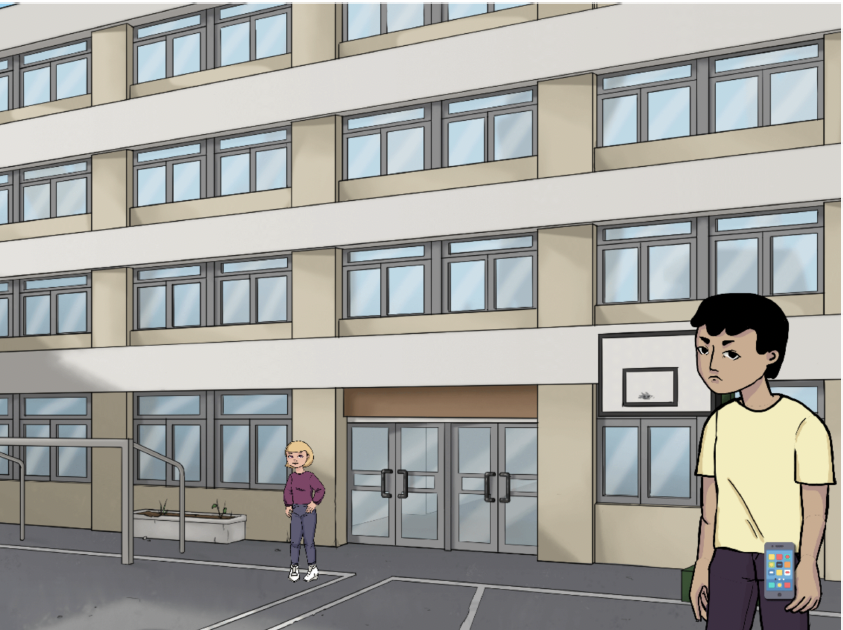
Conectado: Connecting games, data, and research
Serious games have proven to be educational tools with numerous positive effects, capable of promoting learning, changing behavior, or improving training and skills development, among other effects. A big challenge is our ability to translate complex player activity into meaningful insights, both a data collection and processing problem. We spoke with Artem Vartanov, a fourth-year student in the e-learning group at La Universidad Complutense de Madrid (UCM) led by Antonio Calvo Morata and Baltasar Fernández Manjón, about work he did as an intern to explore these issues using the serious game Conectado.

Event Data Standards: Building Community
For a game to be used for learning research, data on how it is played needs to be collected. Event data is the raw information that comes out of a game as players interact with it. “If you want to do analyses from what players are doing within games, we need to make sure we've captured the raw material that downstream analytic processes can actually use,” explained Erik Harpstead, who together with Luke Swanson and Jeci Younger have been pooling their experience designing, fielding, and analyzing learning games to develop a shared schema for game event data. This work was supported by the National Science Foundation, Grant # 2243668

Shadowspect: The Power of Sharing Games
Jenn Scianna started working with Professor YJ Kim on a project investigating how teachers understand persistence in the classroom. They used Shadowspect, a learning game designed by YJ to measure student persistence and spatial reasoning. YJ and Jenn worked with the Field Day team to create a data schema that mapped the existing event logging built into the game, and loaded Shadowspect into the Vault, a game distribution service that also enables the collection of anonymous player data. “So, even though the main research questions had been addressed in the co-design work, the game lives on,” explained Jenn. “Data are still coming in!” This work was supported by the National Science Foundation, Grant # 2243668